Pool fence regulations QLD: every rule, in plain English
Pool fence regulations in QLD, explained plainly: height, gaps, gates, latches, the 900mm non-climbable zone, windows and CPR signs. Checked against QBCC.
Pool fence regulations in QLD come down to a handful of numbers. Your pool fence must be at least 1200mm high, with no gap bigger than 100mm. The gate must open away from the pool, and self-close and self-latch from any position. A 900mm non-climbable zone must stay clear. And a CPR sign must be on display.
These rules cover every pool and spa in Queensland that can hold 300mm of water or more.
Rob Blackbeard spent 20 years designing and building pool fences, balustrades and staircases. Now he inspects them as a QBCC licensed pool safety inspector. This guide explains each rule the way Rob checks it on site. Every rule is taken from the Queensland Building and Construction Commission (QBCC), the body that runs the pool safety laws.
Which pools do the QLD pool fence regulations cover?
Queensland’s pool safety laws cover any pool or spa that can be filled with water to a depth of 300mm or more. That includes in-ground pools, above-ground pools, spas, wading pools and inflatable pools. They apply at houses, unit complexes, hotels, motels, caravan parks and backpacker accommodation. Ornamental fish ponds are exempt.
Two points catch people out:
- A spa with a lockable lid still needs a fence. The lid does not count as a barrier.
- Portable and blow-up pools count. If it can hold 300mm of water, the same rules apply.
Every regulated pool must also be listed on the QBCC pool register. When Rob inspects a pool that is not registered, he registers it at no extra cost.
How high does a pool fence need to be in QLD?
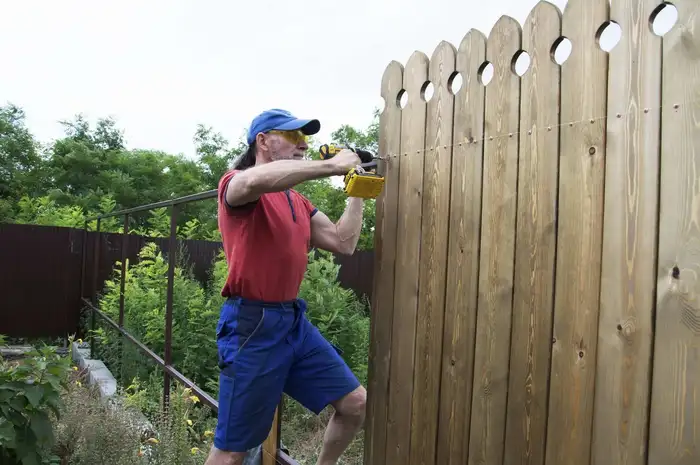
A pool fence in Queensland must be at least 1200mm high at every point along its length. You measure from the finished ground level to the top of the fence, at a right angle to the ground. The fence must stand on stable, solid ground. On sloping or stepped sites, it still needs 1200mm everywhere.
On site, height is where a compliant fence slowly becomes a non-compliant one. Here is what Rob looks for:
- Garden beds and mulch that have built up. Raised soil at the base eats into the 1200mm.
- Stairs beside the fence. Measure from the nosing of each stair tread straight up to the top of the fence.
- Pavers or decking added after the fence went in. A new surface raises the ground level.
The fix is usually simple. Lower the soil, move the garden bed, or raise the fence.
What gaps are allowed in a pool fence?
No gap in a pool fence can be bigger than 100mm. That applies to the gap between the ground and the bottom of the fence, and the gap between vertical bars, slats or palings. The ground under the fence must also be solid. Sand or mulch can be dug out by a child to open a gap wider than 100mm.
The fence also cannot give a child a foothold. Any ledge, protrusion or indentation on the outside must be 10mm or less. Every part must be fixed in place with screws or permanent fittings. Nothing should be broken, loose or able to bend.
What is the 900mm non-climbable zone?
The non-climbable zone (NCZ) is a continuous 900mm space that a small child cannot climb. On the fence itself, the horizontal rails must have at least one gap of 900mm between them, measured top of rail to top of rail. Around the fence, climbable objects must sit at least 900mm away on the outside.
For a fence under 1800mm high, you also need a clear area on the inside. Keep climbable objects at least 300mm from the inside of the fence.
The QBCC lists the objects that commonly break the zone:
- BBQs and outdoor furniture
- Trees, shrubs and overhanging branches
- Pot plants, rockeries and raised garden beds
- Toys, including trampolines
- Air-conditioning units, taps and pipework
- Window sills, deck ledges and climbable security screens
If you cannot move an object, you can shield it. Flat polycarbonate sheeting, vertical palings or a fillet angled at 60 degrees or more will make it non-climbable. Our guide to non-climbable pool plants covers what to plant near the fence.
What if the rails are less than 900mm apart?
You have two options. Fit a timber wedge of at least 60 degrees to the top of each rail, with palings less than 10mm apart. Or build the fence at least 1800mm high and keep a 900mm non-climbable zone on the inside, measured down from the top. This option suits boundary fences, where you cannot control the neighbour’s side.
What are the rules for pool gates, latches and hinges?
A pool gate in Queensland must open away from the pool. It must self-close and self-latch from any open position, every time, without anyone pushing it. The latch must not open when pulled, pushed or jiggled. A pool gate must never be propped open.
The main latch and hinge rules:
- Latch position: the latch must be out of a child’s reach. The right position depends on the gate and the setting, so Rob checks it on the day.
- Hinges: at least 900mm apart, measured top of lower hinge to top of upper hinge. If they are closer, the lower hinge needs a 60-degree safety cap.
Gates take a beating. A kicked ball or a child swinging on the gate can knock a latch out of line over time. Salt air on the coast is hard on hinges. Test your gate from several open positions every few weeks. Oil the hinges and latch as the maker recommends.
Can a glass pool fence fail an inspection?
Yes. Glass pool fences must use reinforced glass with no signs of fracture. The QBCC names four common problems: ledges wider than 10mm on the outside, gaps over 100mm where panels meet stairs, panels that measure under 1200mm on stairs, and panels that have moved or dropped as the ground shifts.
Shake each panel. Check the joins. A panel that has sunk even slightly can take the fence under the legal height. Rob built glass balustrades for years, so he knows where they drift.
Can a boundary fence or house wall be part of the pool barrier?
Yes, if it meets the standard. A boundary fence can act as the pool fence if it is at least 1200mm high, non-climbable on the outside, and has no climbable items within 300mm on the inside. A building wall on a shared boundary also works if it is 1200mm high and non-climbable on the outside.
If the boundary fence needs work to comply, the pool owner pays the full cost. You must talk to your neighbour first, or give them a Form 39 (notice of proposed fencing work) at least 14 days before work starts. If your neighbour also has a pool, give at least 1 month’s notice.
What are the rules for doors and windows near the pool?
No door can open directly into an outdoor pool area. Child-resistant door sets are only allowed for indoor pools. A window that opens into the pool area must be restricted to open less than 100mm, or it must have a permanently fixed security screen. A window lock on its own does not comply.
A few more rules sit around the house:
- Windows as part of the barrier: allowed if there is a clear drop of at least 1800mm from the sill to the pool area.
- Louvres: gaps less than 100mm, fixed so they cannot be removed without a tool.
- Balconies: a balcony over or within 900mm of the pool fence needs a balustrade that meets the pool fence standard.
- Patios, decks and pergolas inside the pool area: one side must stay permanently open, so children can be seen.
Do you need a CPR sign by your pool in QLD?
Yes. Every regulated pool must display a compliant CPR sign. It must show how to perform CPR, starting with 30 chest compressions followed by 2 breaths. It must be at least 300mm by 300mm, made of durable, weatherproof material, and easy to see from the pool. It must also explain what to do in an emergency.
An old or faded sign needs replacing. It is a quick fix. Poolinspec supplies a compliant CPR sign for $35 + GST. Our guide to a compliant CPR sign covers where to put it.
Do above-ground pools and spas need a fence?
Yes, if they can hold 300mm of water. The sides of an above-ground pool or spa can act as the barrier if they are at least 1200mm high and non-climbable from outside, with no bracing in the non-climbable zone. The access point, such as a ladder, must sit inside a compliant fence and gate.
When do you need a pool safety certificate?
You need a pool safety certificate (Form 23) when you sell, buy or lease a property with a pool, unless a current one is already in place. A certificate lasts 2 years for a non-shared pool, like a house or townhouse. It lasts 1 year for a shared pool, like an apartment complex, hotel or caravan park.
A seller without a certificate gives the buyer a notice of no pool safety certificate (Form 36) before the contract is signed. The buyer then has 90 days after settlement to get a certificate. Our guide to pool safety certificate requirements walks through each situation.
Even without a sale or lease, the law is clear. Your pool fence must comply at all times. Local councils can inspect pools and enforce the standard.
What happens if your pool fails the inspection?
If your pool does not comply, you get a non-conformity notice (Form 26). It lists each fault and what needs fixing. You then have 3 months to have the pool re-inspected by the same inspector. No other inspector can certify the pool during those 3 months. A Form 26 does not extend a buyer’s 90-day deadline.
A fail is a to-do list. Often it is a latch, a hinge or a pot plant in the wrong place. Rob can carry out minor repairs himself, such as adjusting a gate, replacing a latch or hinge, or clearing a climbable object. Bigger fence work is quoted upfront. A re-inspection is from $79 + GST, and only if one is needed.
How can you check your pool fence before the inspection?
Start with our 5-point pool fence compliance check. It takes a few minutes. For a full walk-through, use our pool safety checklist for QLD.
Want a professional view first? Book a pool safety consultation. It costs from $100 + GST. See every fee on our pool inspection prices page.
A compliant barrier is there for the moment no one is watching. A certificate can never replace supervising children around the pool.
Book a pool safety inspection with Rob
Rob knows every one of these rules from both sides of the fence. He checks your pool against 100+ safety points and walks you through what he finds. He usually inspects within 24 hours of your call. If your pool complies, your certificate is delivered the same day.
Book your pool safety inspection or call Rob on 0457 445 197. Buying a home with a pool? Book a pre-purchase pool inspection before you sign. Selling or leasing? Start with our pool safety certificates on the Gold Coast.
Need a pool safety certificate?
Rob is usually at your pool within 24 hours, anywhere on the Gold Coast. If it passes, your certificate comes the same day.
Book a Pool Inspection 0457 445 197